

How Do You Find Genuine Vacuum Replacement Parts?
, by Editorial Team, 16 min reading time
, by Editorial Team, 16 min reading time
Vacuum replacement parts that fit right start with your model number. Learn how to find genuine OEM parts by model, check diagrams, and avoid knockoffs.
Last Updated: November 4, 2026
Quick Summary
To find genuine vacuum replacement parts, start with your exact model number, which you can find on a label on your machine or in the owner's manual. Then match the part number against your manual or the manufacturer's parts list before you pay. Checking these details first prevents the wrong part and a return.
Finding genuine vacuum replacement parts starts with one piece of information: your exact model number. A common problem is ordering a filter or belt that looks right, then discovering it doesn't fit. Matching the part to your machine takes a few minutes of checking, and it saves a return and a second order.
The model number identifies the product line, while the serial number identifies your specific unit. Parts are usually listed by model, so the model number is the one you need first. Keep the serial number handy in case a manufacturer uses it to separate production runs.
Write both numbers down before you start shopping. Check the vacuum itself, the owner's manual, and the original packaging if you still have it.
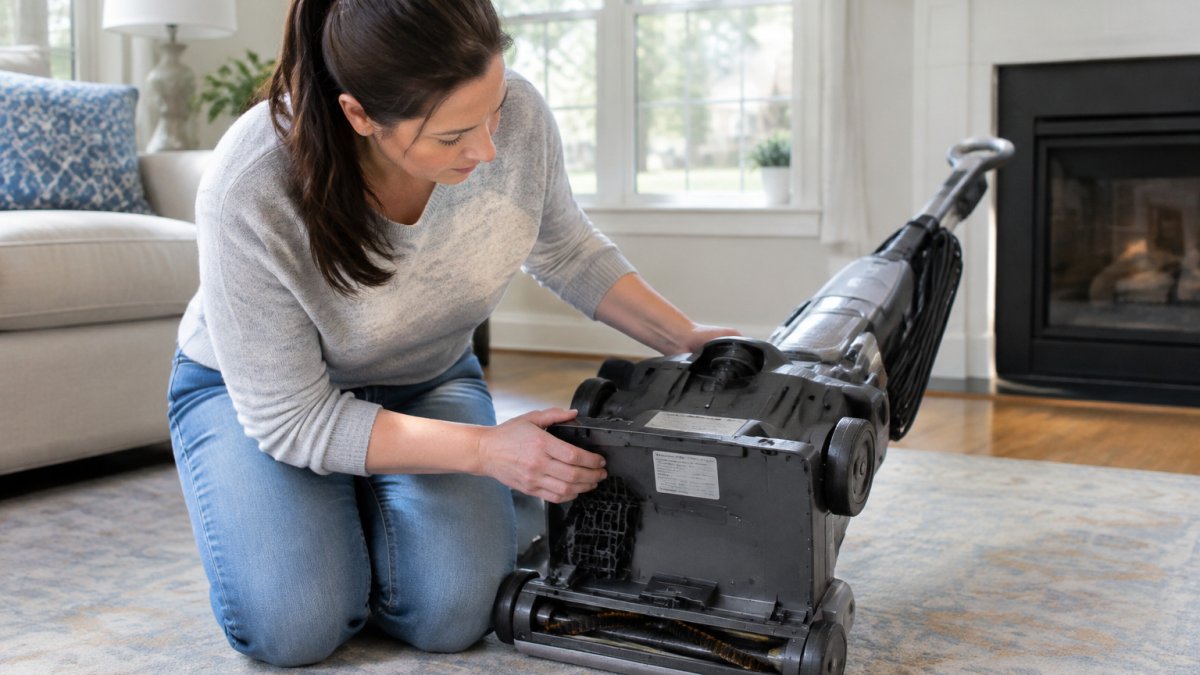
Manufacturers place the model label in different spots depending on the design:
If the label is worn or painted over, the owner's manual or the manufacturer's website can confirm the model.
Model numbers are the most reliable way to match a part. Two vacuums from the same brand can look nearly identical yet use different filters, belts or bags.
Compare the part number on the replacement against the part number in your owner's manual or on the manufacturer's parts list. If the numbers match, the fit is almost certain.
Here is a Riccar example. The Riccar R40 Deluxe Filter Set for R40 Series Part # RF40 is listed for the R40D and R40 models.

Riccar Supralite owners can compare their model against the Riccar Supralite RSL HEPA media vacuum bags, 6 pack, original Riccar part RFH-6, which lists the genuine bag for that model family.
A parts diagram, sometimes called an exploded view, shows every component of your vacuum with a reference number.
Find the diagram for your exact model in the manufacturer's service documents or on a parts site. Once you have the reference number, verifying appliance part compatibility against the model and its specifications helps confirm that the part will fit and function as intended.
Diagrams also help you confirm that a part is a separate item, not something built into a larger assembly. That matters because replacing an assembly usually costs more than replacing a single component.
OEM stands for original equipment manufacturer. OEM parts are made by or for the brand that built your vacuum. Aftermarket parts are made by other companies to fit your machine. Price is only one difference between them.
Use this framework to decide part by part rather than adopting a blanket rule.
Price. Aftermarket parts are often less expensive, but the savings can disappear if the part fails early or causes a second repair.
Warranty. Some manufacturers state that damage from non-OEM parts is not covered. Check your warranty terms before installing an aftermarket part in a machine that is still under coverage.
Availability. OEM parts are sometimes backordered. If you need the vacuum working this week, an aftermarket part from a seller with a clear return policy may be the practical choice.
A common pattern is to use OEM for anything that touches airflow or the motor and aftermarket for simple mechanical wear items. When in doubt, match the original part number. The Kirby Universal Style Allergen Reduction Bags for Type F Sentria and Generation models, 6 pack, Kirby part 204811G is an example of an OEM-numbered bag.
Watch out: a listing that says "fits most models" or "universal" is a compatibility claim, not a part number match. Confirm the part number against your manual before you pay.
Verification takes less than five minutes and protects you from counterfeit or mislabeled parts. Check these points before you pay:
Watch out: a "universal" bag or filter may fit several models differently. Confirm the part number before ordering.
Before you pay, check these points to confirm a part is genuine:
| Check | What to confirm | Red flag |
|---|---|---|
| Part number | Matches your manual or parts list exactly | Only says "fits most models" |
| Model compatibility | Names your model, not just a product family | Lists a product family only |
| Packaging | Shows manufacturer logo and part number | No logo or part number |
| Price | Consistent with a genuine brand-name part | Unusually low price |
| Seller details | Clear return policy and specifications | No return policy or vague specs |
Older and discontinued vacuums can be harder to support, but genuine parts are often still listed under the original part number. Start with the model number on the label, then search the part name with that number. If the search returns nothing, try the part number from your manual or the diagram.
Eureka owners often need belts and HEPA filters. The Eureka RD vacuum cleaner belts, 2 pack, original part 52100C is listed under its original part number, which helps when an older model is no longer in production. For an older DCF-series machine, the Eureka DCF-10 and DCF-14 HEPA filter, part 62731 lists the matching genuine part.


Before you spend time hunting a rare part, decide whether the repair is worth doing. This is the step most parts pages skip, and it is the one that saves the most money.
Repair is usually the better call when:
Replacement is usually the better call when:
Use these ratings to decide whether to do the job yourself or take it to a shop. Ratings are 1 (easiest) to 5 (hardest).
If a part is discontinued, a shop that repairs vacuums can often identify a compatible replacement or recommend a repair instead of a new machine.
Watch out: a repair that requires opening the motor housing can void a remaining warranty. Check the warranty terms before you start.
Once you have your model number and the matching part number, ordering is straightforward. Use the model check, the diagram and the authenticity steps above, and you will avoid most of the common mistakes. Shop genuine replacement parts and accessories at Vacuums Unlimited.
Start with the manufacturer's parts listings or an authorized dealer, since they stock genuine OEM parts matched to specific models. Vacuums Unlimited sells genuine parts online, including Riccar R40 Deluxe filter sets for $36.99 and Sebo filter sets for $24.99 to $44.99. Have your model number and serial number ready before you search, because many vacuums share a product line but use different filters, belts and brushrolls.
Locate the model and serial number on the label, usually on the underside, back or inside the canister, then search parts by that model. Compare the part number against a vacuum parts diagram to confirm it matches the component you are replacing. If a listing says a part fits a specific series, such as the Riccar R40 Deluxe filter set, check that your model matches exactly, since similar models like the R40 Premium use a different set.
OEM parts are made to the original manufacturer's specifications, so fit and filtration performance match what the vacuum was designed to use. Aftermarket parts can cost less and may vary in fit.
Many parts for older models remain available, but availability varies by brand and model age. Check the listing's model compatibility before buying, and contact the seller with your exact model number if you are unsure. Vacuums Unlimited stocks genuine Sebo filter sets, including the Sebo Microfilter K and C 6191AM at $24.99,
