

How Often to Replace Vacuum Bags: A Practical Guide
, by Editorial Team, 16 min reading time
, by Editorial Team, 16 min reading time
Learn how often to replace vacuum bags based on household use, pets, and vacuum type. Includes signs of fullness and maintenance tips.
Last Updated: October 11, 2026
How often to replace vacuum bags depends on your household's specific situation. Timing matters more than most homeowners realize.
For regular household use, replace your vacuum bag every 1 to 3 months. Timing depends on carpet type, foot traffic, and debris volume, hard floors stretch bag life longer, while carpeted high-traffic areas fill bags faster.
Check your bag's fullness indicator monthly. A full or nearly full bag reduces suction dramatically and forces your vacuum to work harder.
A typical family vacuuming 2-3 times per week with minimal pets can expect a bag to last 2 to 3 months. Hard floors may extend this to 4 months; wall-to-wall carpet may reduce it to 6-8 weeks. Replace bags before they're completely full to maintain consistent suction.
Pet owners and busy households with multiple children should replace bags every 4 to 6 weeks. Pet hair, dander, and the extra debris that comes with an active household fill bags much faster than typical use.
If you have two or more pets, consider replacing bags every 3 to 4 weeks. The hair and fur alone will reduce your vacuum's performance noticeably. Genuine bags like SEBO Airbelt D4 Filter Bags are engineered with triple-layer microfiber to handle pet hair, but they still need regular replacement to work effectively.


A vacuum bag's lifespan depends on dust capacity and airflow performance, not calendar time. It's measured by debris volume and type.
A standard vacuum bag holds 0.8 to 1.5 gallons, but capacity and performance differ. As dust accumulates, it compresses and blocks airflow. Fine particles like pet hair and dander create a dense mat that restricts air passage even at half capacity. Once a bag reaches two-thirds to three-quarters full, suction drops noticeably. Replace it then, waiting until completely full damages your motor and filter.
Fine dust sources like pet hair and dander cause airflow loss sooner than coarse debris. Humidity also accelerates this, dust absorbs moisture and compresses faster. In humid climates or if you notice musty odors, replace bags more frequently even if they don't look full.
Genuine bags from quality manufacturers last longer because they use superior filtration materials. Electrostatic microfiber bags from SEBO and Miele trap more dust and maintain airflow longer than generic alternatives. Off-brand bags clog faster and require replacement 20-30% more frequently, offsetting upfront savings.
Don't wait for a warning light. Learn to recognize the signs that your bag is full before performance suffers.
Reduced suction is the most obvious sign the bag is full. Check the bag's fullness indicator if your model has one. Look for dust escaping around the bag seal or visible in the compartment, if you see dust where it shouldn't be, the bag has exceeded capacity.
A musty smell indicates the bag is full and trapping moisture, signaling poor airflow and overdue replacement. For allergy or asthma sufferers, a full bag fails to filter effectively, allowing allergens to escape. Replace bags more frequently if anyone has respiratory sensitivity.
Disposable vacuum bags are designed for single use only. Once full, filtration effectiveness drops significantly and the electrostatic charge dissipates. Emptying and reusing damages the bag's internal structure. Reusable bags exist for certain models only, check your manual. For standard disposable bags, replacement is the only option. Genuine bags from SEBO and Miele are engineered for optimal performance and cost less when you factor in extended vacuum life.
Central vacuum bags typically need replacement every 6 to 12 months for average household use due to their larger capacity. Check your system's manual for specific bag type and capacity. If you notice reduced suction or persistent odor before 6 months, check the bag, humidity, pet hair, and debris type affect fill rate.
Replacing a vacuum bag correctly ensures optimal performance and protects you from dust exposure, especially important for allergy and asthma sufferers.
Replace bags outdoors or in a well-ventilated area. If indoors, open a window. Wear an N95 mask if you have allergies or asthma, a full bag releases concentrated dust and allergens. Gather supplies first: replacement bag (confirm model match), trash bag, and damp cloth.
Always unplug your vacuum before opening the bag compartment to prevent accidental activation and protect yourself from moving parts.
Find the bag access panel, most models have a clearly marked door or latch. Consult your manual if unsure. Open gently and slowly to avoid creating a dust cloud.
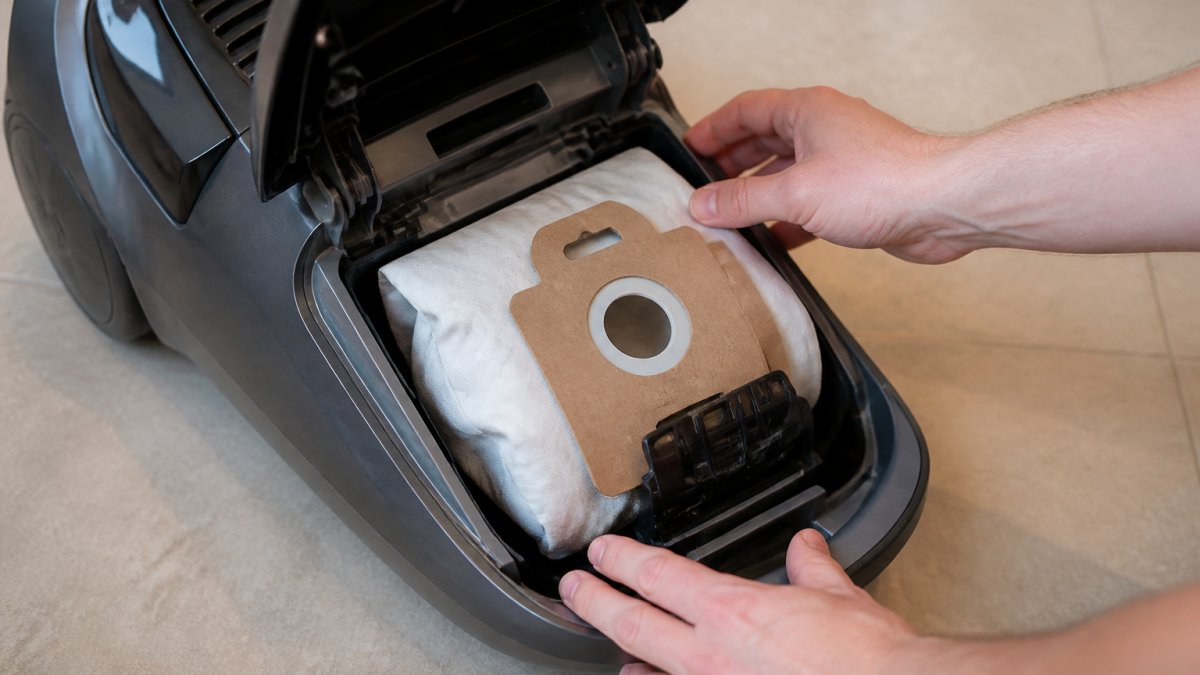
Grasp the bag by its handle or the area near the top, never squeeze the middle of the bag, as this can rupture it and release dust. Pull it straight out of the compartment in one smooth motion.
If your bag has a self-sealing cap, the cap will close automatically as you remove it, trapping dust inside.
Immediately place the full bag into a trash bag or directly into your outdoor trash bin. Do not set it down on a clean surface or leave it open.
Wipe the inside of the bag compartment with a damp cloth to remove residual dust. This prevents dust from settling on the new bag and improves the seal between the new bag and the compartment.
Remove the new bag from its packaging. Inspect it briefly to confirm it matches your vacuum model, the connection point (usually a cardboard collar or plastic fitting) should match the opening in your vacuum's compartment.
Align the new bag with the compartment opening. Insert it firmly and straight until it seats properly.
Make sure any connection points, clips, or latches are fully engaged. Some vacuums require you to twist the bag collar to lock it in place; others have spring clips that must be pressed down.
Geniune replacement bags like Miele GN XL-Pack AirClean Vacuum Cleaner Bags come with detailed installation instructions specific to your model. Follow those instructions to ensure proper fit and performance.
Close the bag compartment door or latch securely. Confirm that the door is fully latched and there are no gaps where dust could escape.
Plug your vacuum back in. Run it briefly on a small area, a few passes over a low-traffic spot, to confirm suction is restored and the bag is installed correctly. You should notice an immediate improvement in suction if the previous bag was full.
If suction does not improve, the bag may not be seated properly. Unplug the vacuum, open the compartment, and check that the bag is fully inserted and all connection points are engaged.
Different vacuum styles have different bag capacities and designs. Understanding your vacuum type helps you predict replacement frequency more accurately.
Upright vacuums typically use smaller bags with capacities between 0.8 and 1.2 gallons. These bags fill faster than canister models because upright designs concentrate debris collection in a compact space. Replace upright vacuum bags every 4 to 12 weeks depending on use.
Genuine upright bags from brands like SEBO feature electrostatic filtration that maintains suction longer. Investing in quality bags reduces the frequency of replacement over time.

Canister vacuums have larger bags, often 1.2 to 1.5 gallons, and replacement frequency is typically 8 to 16 weeks. The larger capacity and design of canister models allow more efficient dust collection before the bag fills.
SEBO Airbelt K Filter Bags are engineered for canister models and feature a top-fill design that maintains airflow even as the bag fills. This design extends the time between replacements while keeping suction consistent.
Robot vacuums have significantly smaller dustbins, not traditional bags. These need emptying every 2 to 4 weeks depending on floor size and debris volume. Some robot models use disposable collection bags that fit inside the dustbin, and those should be replaced when full.
Pet owners and allergy sufferers need a different replacement schedule than average households.
Pet hair and dander accumulate rapidly. If you have one pet, reduce your replacement interval by 25 to 50 percent. If you have two or more pets, replace bags every 3 to 4 weeks. The extra debris means faster bag saturation.
For households with allergies or asthma, frequent bag replacement is essential for air quality. A full or nearly full bag allows allergens to escape back into your home. Replace bags when they reach two-thirds capacity, even if they could technically hold more dust.
Genuine HEPA-compatible bags work best for allergy sufferers. They trap fine particles that trigger allergic reactions. Pair frequent replacement with a quality bag designed for allergen filtration.
Knowing how often to replace vacuum bags keeps your machine running efficiently and your home cleaner. Shop our collection of vacuum cleaner bags and filters to find the right replacement for your model, and get expert guidance on maintaining your vacuum for years of reliable cleaning.
| Household Type | Vacuum Style | Replacement Interval | Key Factor |
|---|---|---|---|
| Regular use, no pets | Upright | 8-12 weeks | Standard dust accumulation |
| Regular use, no pets | Canister | 12-16 weeks | Larger bag capacity |
| Heavy use, 1-2 pets | Upright | 4-6 weeks | Pet hair and dander |
| Heavy use, 2+ pets | Upright | 3-4 weeks | Rapid debris buildup |
| Allergy household | Any | 4-8 weeks | Frequent filtration needed |
A vacuum bag typically lasts 1 to 3 months with regular household use, but this depends on how often you vacuum and your home's dust level. Homes with pets or multiple household members may need replacement every 2 to 3 weeks. Check your vacuum's manual for manufacturer recommendations, as different models have varying bag capacities. High-quality bags like Sebo Airbelt D4 Filter Bags are designed to maximize capacity while maintaining suction throughout their use cycle.
Most disposable vacuum bags should not be emptied and reused, as they are designed for single use and lose effectiveness once opened. The electrostatic filtration layer degrades after disposal, reducing dust retention and airflow. However, some reusable cloth bags can be emptied carefully. Check your bag's instructions first. For best performance and hygiene, especially in allergy-prone households, replacing bags with genuine options ensures proper filtration and prevents allergen escape.
Replace your bag when it reaches two-thirds to three-quarters full. Signs include reduced suction, weak airflow, unpleasant odors, and a full indicator light on your vacuum. Never wait until the bag is completely full, as overfilled bags restrict airflow, reduce cleaning performance, and can damage your vacuum's motor. Checking the bag monthly during regular use helps you catch fullness early and maintain consistent suction.
Central vacuum bags typically need replacement every 3 to 6 months with regular household use, depending on system size and usage frequency. Homes with pets or allergies may require more frequent changes. Check your central system's bag capacity and monitor for reduced suction.