

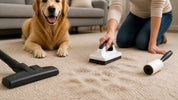
How to Clean Pet Hair from Carpets: 7 Proven Methods
, by Editorial Team, 17 min reading time
, by Editorial Team, 17 min reading time
Learn how to clean pet hair from carpets with rakes, rubber brushes, vacuums and more. Step-by-step methods for embedded hair, plus prevention tips.
Last Updated: October 12, 2026
Pet hair is not just sitting on top of your carpet, it is woven into the fibers, which is why a quick vacuum pass often does nothing.
Surface cleaning fails because suction alone cannot pull hair wrapped around carpet fibers. You must loosen the hair first, the step most people skip.
The core problem comes down to three things:
If your carpet looks clean but still triggers allergies, embedded hair is likely the cause.
The right tool depends less on how much hair you have and more on what your carpet is made of. A stiff metal rake that rescues a synthetic frieze can permanently fuzz a wool loop pile or snag a delicate viscose rug.
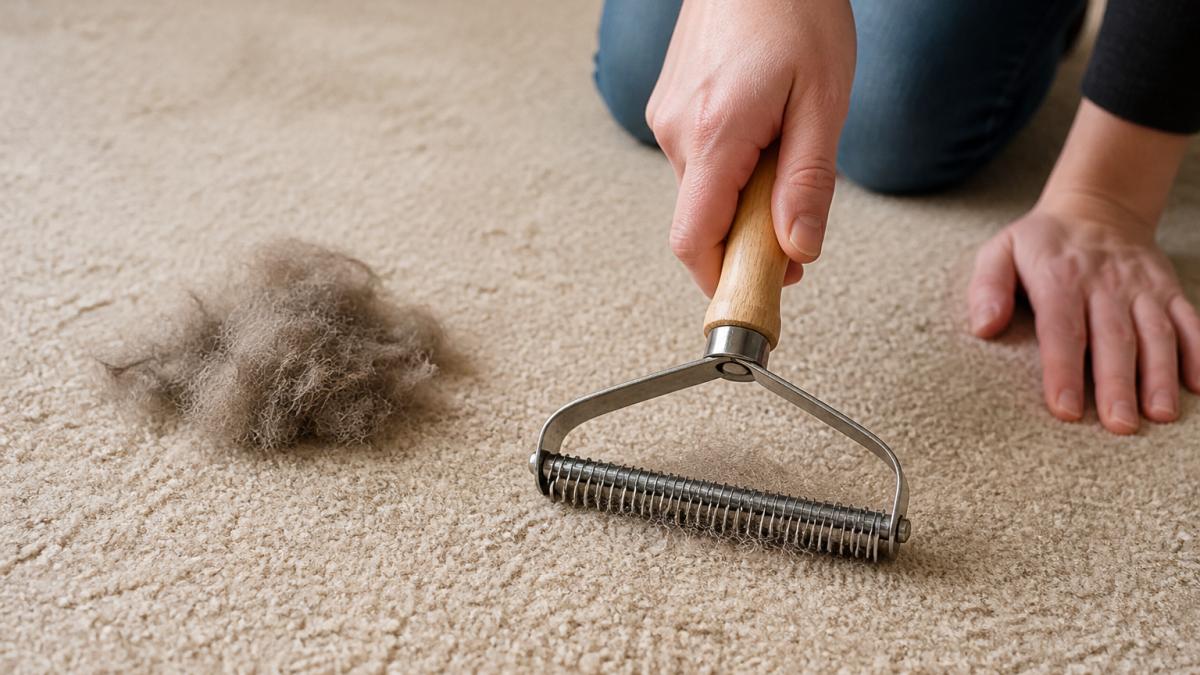
A carpet rake has stiff bristles or rubber teeth in a wide head. Pull it in short strokes with the pile, not against it, and the teeth drag hair to the surface. Rubber brushes do the same job through friction and a light static charge.
On thin or low-pile carpet, use light pressure and short strokes so you do not stress or delaminate the backing.
These low-risk tools are the right starting point on any carpet you have not cleaned before.
| Carpet type | Safest first tool | Use with caution | Avoid |
|---|---|---|---|
| Tight synthetic cut-pile (nylon, polyester, olefin) | Metal-tined carpet rake | Rubber brush for daily touch-ups | Soaking the backing |
| Frieze or shag | Rubber brush, then slow vacuum | Metal rake on very long pile | High brush-roll settings |
| Loop pile / berber | Rubber brush or rubber gloves | Squeegee on edges | Metal rakes, aggressive brush rolls |
| Wool or wool blend | Rubber gloves, rubber brush | Gentle rake with light pressure | Fabric softener, harsh chemicals |
| Delicate or hand-knotted rugs | Rubber gloves, low-suction vacuum | Damp cloth on surface only | Rakes, brush rolls, moisture |
For best results, loosen hair with the gentlest tool that works, then vacuum. If a rubber brush lifts the hair, skip the metal rake.
Removing embedded pet hair from carpet takes four steps. Skip one and you will leave hair behind:
Repeat weekly, or every few days for heavy shedding.
This method works well for deeply lodged hair. Mix one part fabric softener with three parts water in a spray bottle. Lightly mist the carpet. Do not soak it. Let it sit for five minutes.
The softener coats the hair and carpet fibers. This reduces the friction that holds hair in place. Then vacuum slowly. You should see more hair come up.
You can remove dog hair from carpet without a vacuum. The key is mechanical action, friction that pulls hair from the fibers. Try these methods:
After loosening the hair, pick it up with damp paper towels, the moisture helps hair stick. This takes more effort than vacuuming, but it works when you have no vacuum or need to clean a small area fast.
A vacuum only removes embedded pet hair if it can agitate the pile and keep suction at the floor. Two machines with identical specs can perform very differently once hair wraps the brush roll or the filter loads up.
Look for these features:
Miele Guard L1 Cat & Dog Vacuum Cleaner →
At Vacuums Unlimited, we carry models built for pet homes. The Miele Guard L1 Cat & Dog has a turbo brush that removes embedded hair from carpets and upholstery. Its Active AirClean filter helps neutralize pet odors.

Settings decide whether the vacuum lifts hair or drives it deeper. The brush roll must touch the pile without bogging down, and suction needs a clear path to the floor.
Brush-roll height
Suction and airflow
Attachments for edges, stairs, and upholstery
Maintenance that keeps suction alive
If hair keeps returning within a day or two after a full four-step clean, the vacuum is usually the limiting factor. Weak suction, a clogged filter, or a brush roll that no longer touches the pile will leave embedded hair behind no matter how often you clean.
Vacuum at least twice a week if you have pets, every other day for heavy shedders, and daily in high-traffic areas for multi-pet homes. Prevention habits cut down on embedded hair:
Less hair reaching your carpet means less work later.
Not every method works on every carpet. Match your approach to both the carpet and the hair problem.
| Carpet Type | Best Method | Avoid |
|---|---|---|
| Low-pile | Vacuum with brush roll | Harsh raking |
| Medium-pile | Carpet rake, then vacuum | Too much moisture |
| Thick pile | Rubber brush, slow vacuum passes | High brush settings |
| Wool or delicate | Gentle rubber gloves | Fabric softener spray |
| Stairs and edges | Squeegee, lint roller | Full-size vacuum heads |
For light shedding, weekly vacuuming plus a quick rake is enough. For heavy shedding with deeply lodged hair, use the full four-step process every few days.
Knowing how to clean pet hair from carpets makes a stubborn problem solvable. The key is loosening hair before you vacuum, not just running the vacuum over the surface.
If your current vacuum struggles with pet hair, it may be time for an upgrade. Vacuums Unlimited carries models built for pet homes, including the Miele Guard L1 Cat & Dog and the Riccar Premium Pet Tandem Air.

A carpet rake or rubber brush works best for loosening embedded hair before vacuuming. These tools have stiff bristles or rubber edges that grab hair the carpet pile has trapped. Work in multiple directions, then vacuum afterward. For deeply lodged hair, follow with a vacuum that has a motorized brushroll, like the Miele Guard L1 Cat & Dog, which uses a turbo brush to lift embedded hair from carpets and upholstery.
Use a rubber squeegee, rubber gloves, or a damp sponge and drag it across the carpet in short strokes. The rubber creates static that pulls hair to the surface. You can also mist the carpet lightly with water and a small amount of fabric softener, then rake the fibers with a rubber brush. Collect the loosened hair by hand or with a lint roller. This method works well for surface and lightly embedded hair.
Vacuum high-traffic areas at least two to three times per week when you have pets. Homes with heavy shedders or allergy sufferers may need daily vacuuming in main living spaces. Weekly deep cleaning with a carpet rake before vacuuming helps remove hair the vacuum alone misses. Regular vacuuming with a HEPA-filtered machine also reduces airborne allergens that build up between cleanings.
A light mist of water mixed with a small amount of fabric softener can reduce static and help hair release from carpet fibers. Mix one part fabric softener with three parts water in a spray bottle, mist lightly, then rake or brush the carpet. Avoid soaking the carpet, and test on a hidden area first. This method loosens hair but still requires manual removal or vacuuming afterward.
A vacuum that loses suction mid-job will never beat embedded pet hair. Vacuums Unlimited helps you choose a machine that matches your pets, your flooring, and your allergies, backed by decades of hands-on experience and a team that services what it sells. Shop Vacuums at Vacuums Unlimited and get the suction, filtration, and support your home actually needs.