


Are Used Vacuums Worth Buying in 2026?
, by Editorial Team, 15 min reading time
, by Editorial Team, 15 min reading time
Buying used vacuums in 2026? Weigh cost against lifespan and warranty, then use our 10-point inspection checklist to spot a reliable machine.
Last Updated: October 25, 2026
Quick Summary
Used vacuums are worth buying in 2026 for most households, provided you buy a machine you can inspect, test, and get parts for. A cared-for vacuum rarely dies of old age, so the real question is whether the specific unit has been maintained. Confirm bags, filters, belts, and the brush roll are still available before you buy.
Are used vacuums worth buying in 2026? For most households, yes, provided you buy a machine you can inspect, test, and get parts for.
That is the real argument for buying secondhand. You are not gambling on a mystery box. You are buying a known model, and the question is whether the specific unit in front of you has been maintained.
The savings on a used vacuum come from depreciation, not from a discount on quality. A premium upright that costs several hundred dollars new typically sells for a fraction of that once it leaves the store, even when the motor and housing are barely broken in.
Many buyers find the sweet spot is a machine that is a few years old but still has strong suction and a straight, undamaged cord. You pay for the cleaning performance and skip the markup on the box.
A used vacuum only saves money if the repair and parts bills stay low. The right way to compare is to add up everything you will spend over the years you expect to own the machine, purchase price, consumables, likely repairs, and the value of the remaining service life, not just the sticker price.
Build the comparison in four buckets:
The trap is comparing a used premium machine to a new bargain machine on price alone. The bargain machine often needs replacement within a few years because parts are scarce and the housing cracks, while a used premium model with available parts can be serviced instead of replaced. Spread over five years, the used machine with a real parts network frequently costs less per year of service life, even after one repair visit.
Budget for consumables first: bags, filters, and belts are the recurring costs on any vacuum, new or used. The difference is repairability. Machines from brands with real parts networks can be fixed when a switch or brush roll wears out, and a single service visit is usually far cheaper than replacing the machine.
If you are estimating service costs, our guide to vacuum cleaner repair in Northern Virginia explains what repair options look like.
Most buying guides tell you to "check the brush roll and cord" and stop there. That is not enough to protect your money. Use this step-by-step inspection protocol in order, and stop the moment a unit fails a critical check, a failed motor or cracked housing is rarely worth inheriting, no matter how low the asking price.
Ask the seller for the exact model number and a photo of the data plate before you agree to a pickup. Then confirm three things: the manufacturer still lists the model (or its parts) as supported, consumables like bags and filters are still sold, and a local service shop will work on the brand. If parts are discontinued, walk away, a machine you cannot service is a machine you will replace.
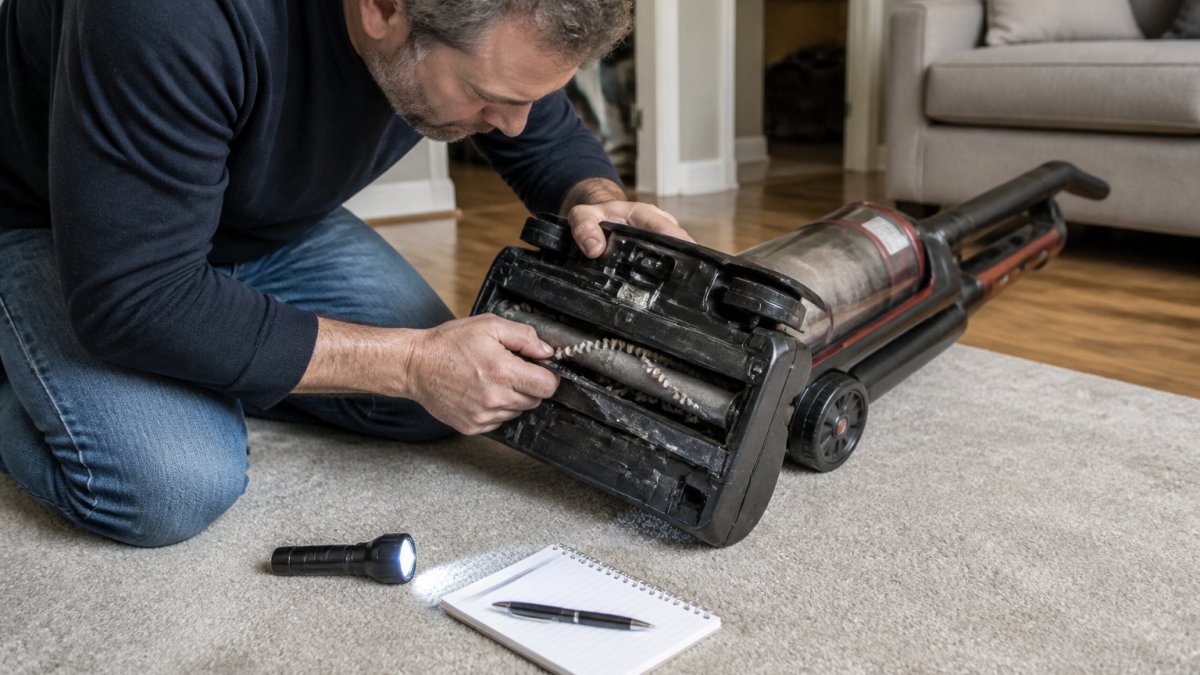
With the vacuum off and unplugged, work from the floor up:
Plug the machine in and turn it on. A healthy motor spins up smoothly with a steady pitch, no grinding, rattle, or surging. Let it run for at least a minute and feel the exhaust; a hot or burnt smell usually points to a failing motor or a blocked airway. Test suction at the nozzle, then at the end of the hose, then at each tool.
Ask how often the filter or bag was changed, whether the machine was ever serviced, and why it is being sold. Vague answers are not disqualifying, but a seller who can name the last filter change and the service shop is a better bet. Ask for the manual and any proof of purchase or prior service records.
At a private pickup, test the machine in person before money changes hands, and ask to plug it in and run it for a full minute. Pay with a method that offers recourse where possible, get a written receipt with the model and serial number, and confirm the return policy in advance if you are buying from a shop or a refurbisher.
A refurbished vacuum cleaner has been cleaned, tested, and had worn parts replaced by a technician. As-is used means exactly that: you take it in whatever condition it sits.
Refurbished machines cost more, but you are paying for someone else to do the inspection and swap the worn belt, filter, or brush roll. For allergy sufferers and anyone who does not want to troubleshoot, refurbished is the safer buy.
A used vacuum warranty should cover the motor and major components for a defined period, and it should be in writing. Ask what is excluded, who honors the claim, and whether consumables like bags and belts are covered.
Most fair warranties exclude normal wear items and damage from misuse. Before you buy, read our used vacuum warranty protection guide to know exactly what to check.
Used vacuum lifespan depends on the model and its service history, not the calendar. A premium upright with a metal brush roll and available parts can keep running for many years past its first owner.
The clues to remaining life are simple. A sealed motor housing, a metal wand, and a brand that still sells parts all point to a long runway.
Match the machine to your floors and your household, not to the price tag. Carpet-heavy homes need strong agitation and good suction. Hard floors and area rugs favor a canister with a dedicated floor tool.
Pet owners should look for a turbo nozzle and a brush roll that resists hair wrap. For a deeper look at handling shedding, see our guide to the best vacuum for pet hair removal. If dust and pollen are the concern, our breakdown of the best vacuum for dust allergies covers filtration in detail.
| Household Need | Vacuum Type | What to Check Used |
|---|---|---|
| Wall-to-wall carpet | Upright, bagged | Brush roll condition, suction at nozzle |
| Hard floors and rugs | Canister | Floor tool, HEPA bag and filter |
| Pets and shedding | Upright with turbo nozzle | Hair wrap on brush roll, belt wear |
| Allergies | Sealed HEPA model | Filter housing seals, genuine filters |
| Stairs and cars | Canister or handheld | Hose condition, tool completeness |
Buying used works best when someone has already done the inspection. At Vacuums Unlimited, we carry new and used machines from brands we are authorized to sell, including Miele, SEBO, Riccar, Simplicity, and Oreck, and we service what we sell.
If you want a new machine with a known service history, the Titan T3200 is a bagged HEPA upright with a 12-amp motor, a wood brush roll, and a stretch hose just over 8 feet for above-floor cleaning. You can browse the Titan T3200 vacuum cleaner and see the full spec before you decide.

It can be, especially if you buy from a retailer that inspects and services the machine first. A quality used vacuums purchase from a brand like Miele, SEBO, or Riccar often costs far less than new while still delivering strong suction and HEPA filtration. The key is checking the motor, brush roll, filters, and service history before you buy, and confirming a warranty is included. Skip any machine sold as-is with no testing or return policy.
Run through a used vacuum buying checklist: turn it on and listen for grinding or rattling, check that suction holds at the hose and floor head, spin the brush roll by hand, inspect the cord for cracks, and open the bag or bin to look for debris buildup. Ask about service history and replacement parts. A machine that was regularly maintained and uses genuine filters will usually outlast a cheaper model that was neglected.
Yes, but it depends on where you buy. Refurbished machines from a reputable retailer often come with a limited used vacuum warranty covering the motor and major components for 30 to 90 days or longer. Private sales rarely include any coverage. Always ask what the warranty covers, how long it lasts, and whether it includes labor. A written guarantee is one of the clearest signs the seller stands behind the machine.
A well-built upright or canister vacuum from a premium brand can last 10 to 15 years or more with regular maintenance. A used vacuum lifespan depends on how hard it was used and whether filters, belts, and bags were replaced on schedule. Before buying, ask the age of the machine and check parts availability. Models with easily sourced replacement parts and brush rolls are the safest long-term investment.
Buying used is a bet on condition and parts availability, and both are checkable before you pay. Vacuums Unlimited helps you reduce that risk with inspected used machines, genuine parts and accessories, and in-house repair service. Get started with Vacuums Unlimited and put a machine you can actually maintain back in your closet.
