

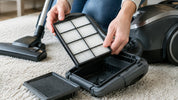
7 HEPA Vacuum Filter Maintenance Mistakes to Avoid
, by Editorial Team, 16 min reading time
, by Editorial Team, 16 min reading time
Keep hepa vacuum filters working right by avoiding 7 common mistakes. See when to wash or replace them and keep suction strong. Get genuine filters today.
Last Updated: November 10, 2026
Quick Summary
To maintain HEPA vacuum filters, check them every few bags or weeks, clean only filters the manufacturer labels washable, and replace them on the schedule in your manual rather than waiting for suction to drop. Most true HEPA cartridges are non-washable, so rinsing them damages the pleats and media.
A clogged filter is the most common reason a good vacuum starts acting like a bad one. Learning how to maintain HEPA vacuum filters protects two things at once: the suction that pulls pet hair and dust out of carpet, and the filtration that keeps fine particles from blowing back into your room.
HEPA vacuum filters are pleated media cartridges that trap fine dust, dander, and allergens before air leaves the machine. When that media loads up, airflow drops. Suction weakens. The motor runs hotter. And the air coming out carries more of what you wanted captured.
A packed filter is often the real problem behind a vacuum that seems broken, and a few minutes of maintenance prevents most of it.
Here is the short version, before the details:
Below, we walk through the washable question, safe cleaning methods, replacement timing, and how to match care to your specific vacuum. But first, here is what most guides get wrong: they treat every filter as washable. Most are not, and washing the wrong one destroys it.
Sometimes, but only when the label says so. Most true HEPA cartridges are non-washable, and rinsing them damages the pleats and media.
The answer depends entirely on what the manufacturer printed on the filter or in the manual. Check before you touch water.
Washable filters are built for rinsing. They usually carry a "washable" or "permanent" label and hold their shape through gentle rinsing.
Non-washable filters are disposable. Water collapses the pleat structure and washes out the fine media that does the actual trapping. Once that happens, the filter looks fine and filters poorly.
A quick way to tell them apart:
If you cannot find a label, treat the filter as non-washable. That is the safe default.
You cannot wash it, but you can knock loose surface dust off a non-washable filter to stretch its life between replacements.
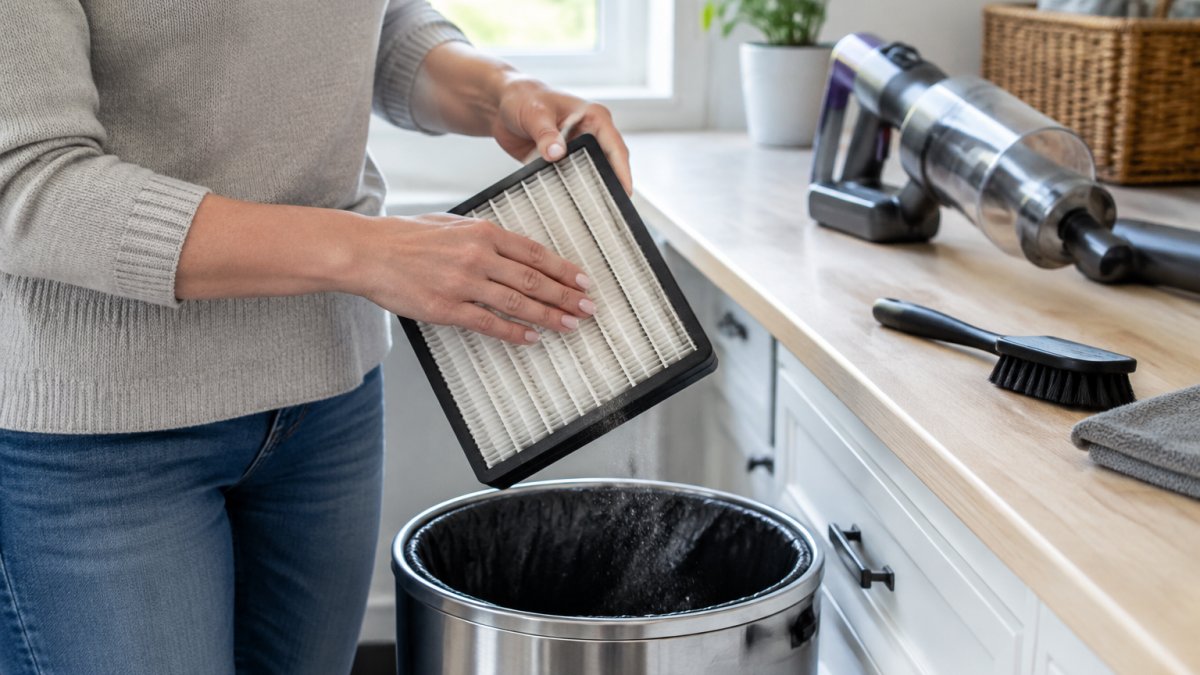
Before you start, decide where the dust will go. A loaded HEPA filter holds the same fine particles the vacuum pulled out of your carpet, and disturbing it releases them.
Follow these steps:
Watch out: never scrub, wring, twist, or use compressed air on a pleated filter. Those actions crush the pleats or drive particles into the fibers, and neither problem can be fixed. You will be buying a replacement sooner than planned.
Know when to stop. If tapping and brushing do not restore airflow, or if the pleats are torn, collapsed, or permanently discolored, replacement is the only safe option. Cleaning a non-washable filter is a stopgap, not a substitute for the replacement interval in your manual.
No, not on a household HEPA cartridge. Compressed air is too forceful for the media and pushes dust deeper into the pleats.
The pressure can tear pleats and drive particles into the fibers instead of out. It can also blast a cloud of fine dust into the air around you.
A safer middle ground is a vacuum's brush attachment on low suction. It lifts surface dust without forcing it inward.
Reserve compressed air for hard surfaces and crevices, never for filter media. If a filter is so loaded that only air would help, it is time to replace it.
Most homes should replace a HEPA filter every six to twelve months. Homes with pets, allergies, or heavy use should replace closer to every three to six months.
That is a general guide. Your manual's replacement interval always wins.
Use this schedule as a starting point:
| Situation | Check Filter | Replace Filter |
|---|---|---|
| Light use, no pets | Every 3 months | Every 12 months |
| Average home, one pet | Every 2 months | Every 6 to 9 months |
| Multiple pets or allergies | Monthly | Every 3 to 6 months |
| Heavy or commercial use | Weekly | Every 1 to 3 months |
Signs it is time, regardless of schedule:
Replacing on schedule costs less than replacing a motor. A clogged filter makes the motor work harder every time you vacuum.
Different machines need different care, and the model matters more than the brand. The same word, HEPA, can describe a large pleated cartridge in a canister, a small washable foam pad in a cordless stick, and a flat panel in a robot. Treating them the same is how filters get ruined.
Use this as a starting point, then confirm against your manual:
For Sebo canister owners, the correct part depends on the series:
If you are unsure which series you own, check the model plate on the machine before ordering. If you are still weighing which machine suits your home, our guide on how to choose a HEPA vacuum for allergies and pets walks through filtration and flooring needs.


A quick decision rule: if the filter is labeled washable, rinse and dry it fully; if it is not labeled, treat it as disposable and replace it on schedule. When in doubt, the manual for your exact model is the only source that overrides general advice.
Replacement filter prices for Sebo canister series
The right filter is the one made for your exact model. Generic filters often fit loosely, and a poor seal lets dust bypass the media entirely.
When you order, have three things ready:
Genuine parts matter here. A filter that seals correctly protects the motor and keeps filtration working as designed. Our guide on how to find genuine vacuum replacement parts explains how to spot counterfeits and confirm part numbers before you buy.
At Vacuums Unlimited, we stock genuine filters for the brands we carry and ship them fast. If you are not sure which part fits, tell us the model and we will match it.
A vacuum that loses suction is usually not broken. It is asking for filter care. Get the washable-versus-disposable call right, clean gently, dry completely, and replace on schedule.
Vacuums Unlimited carries genuine filters for Miele, SEBO, Riccar, Simplicity, and Oreck, and our team can match the exact part to your model. Shop online or bring the machine in and we will help you sort it out.
Yes, in most cases. A non-washable HEPA filter can be vacuumed on the outside with a brush attachment or a low-suction handheld vacuum to lift surface dust. This extends the time between replacements but does not restore a clogged filter to full efficiency. Vacuuming only removes loose debris; embedded fine particles stay in the pleats. Plan on replacing the filter at the interval the manufacturer specifies, and replace it sooner if suction drops noticeably after cleaning.
Only if the filter or the owner's manual says washable. Rinse it under cold or lukewarm water, never hot, and avoid scrubbing or wringing, which tears the media. Use a mild detergent only if the instructions allow it, then rinse thoroughly until the water runs clear. Let it air dry completely, which can take 24 hours, before reinstalling. A damp filter can grow mold and strain the motor, so never reinstall one that is still wet.
Most manufacturers recommend replacing a HEPA filter every 6 to 12 months, or after roughly 50 hours of use. Homes with pets, allergy sufferers, or heavy daily vacuuming may need a new filter every 3 to 6 months. Replace immediately if you see tears, a musty odor, or suction that stays weak after cleaning. Keeping a spare on hand means you never run the vacuum with a damaged filter.
Compressed air can damage HEPA media. High pressure widens the pleats, tears the fibers, and pushes dust deeper into the filter instead of out. If you use air at all, keep the nozzle at least 6 inches away and use short bursts from the clean side. A soft brush or gentle vacuuming is safer for most filters. When in doubt, replace the filter rather than risk a torn one that lets allergens back into the room.
